


















.jpeg?sfvrsn=1ed2d2de_1)
Emory College of Arts and Sciences
At Emory College of Arts and Sciences, classroom technology is expected to disappear into the background. Faculty should be able to walk into a room, press a button, and begin teaching without thinking about the AV system supporting them.
For Griffin Fisher, Manager of Classroom Technology Services, that philosophy has guided technology decisions across more than 120 teaching spaces equipped with hundreds of Biamp DSPs and Parlé Beamtracking ceiling microphones. While the college had successfully standardized on Biamp for conferencing, lecture capture, and hybrid learning, traditional voice lift systems presented an entirely different challenge.
Eliminating microphone management
For many institutions, voice lift means handheld microphones, wireless bodypacks, rechargeable docks, disposable batteries, and ongoing maintenance. Each introduces opportunities for equipment to be misplaced, left uncharged, or simply unavailable when faculty need it most.
“Whether we go with rechargeable or disposable batteries, there are different issues we find,” said Fisher. “We’ve not introduced traditional voice lift in a lot of spaces because of those challenges.”
Instead of creating another technology that required management, the college wanted a solution that simply worked.
When Biamp introduced Parlé Voice Lift, Fisher immediately recognized its potential.
“There are no handhelds, no disposable batteries, no recharging docks,” he said. “It’s like magic.”
There are no handhelds, no disposable batteries, no recharging docks. It’s like magic... We really do want solutions that just work.
GRIFFIN FISHERManager,
Classroom Technology Services,
Emory College of Arts and Sciences
Voice lift without the microphones
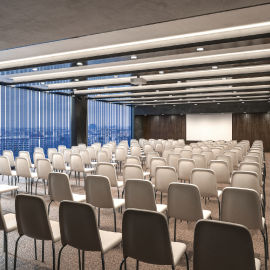
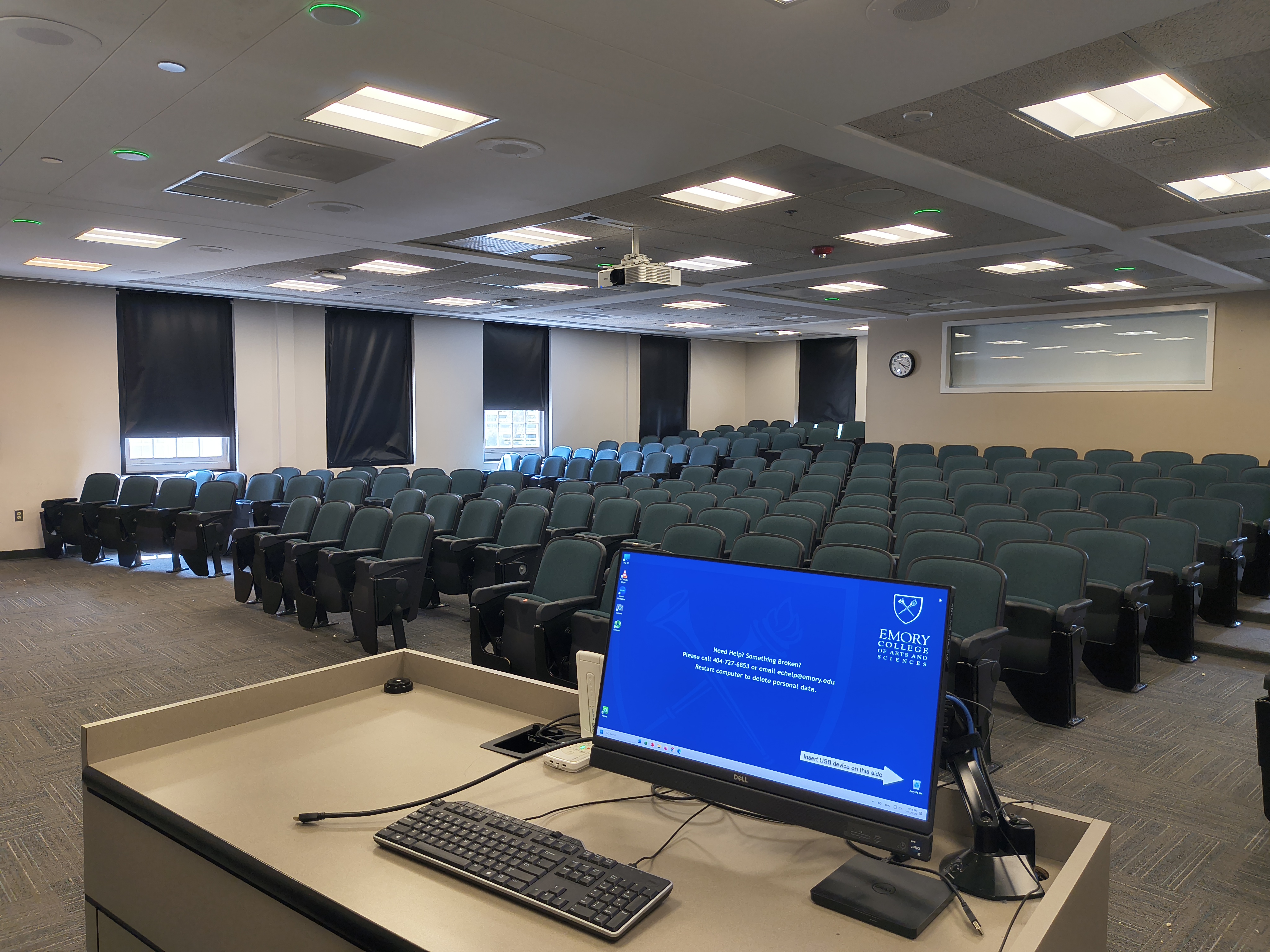
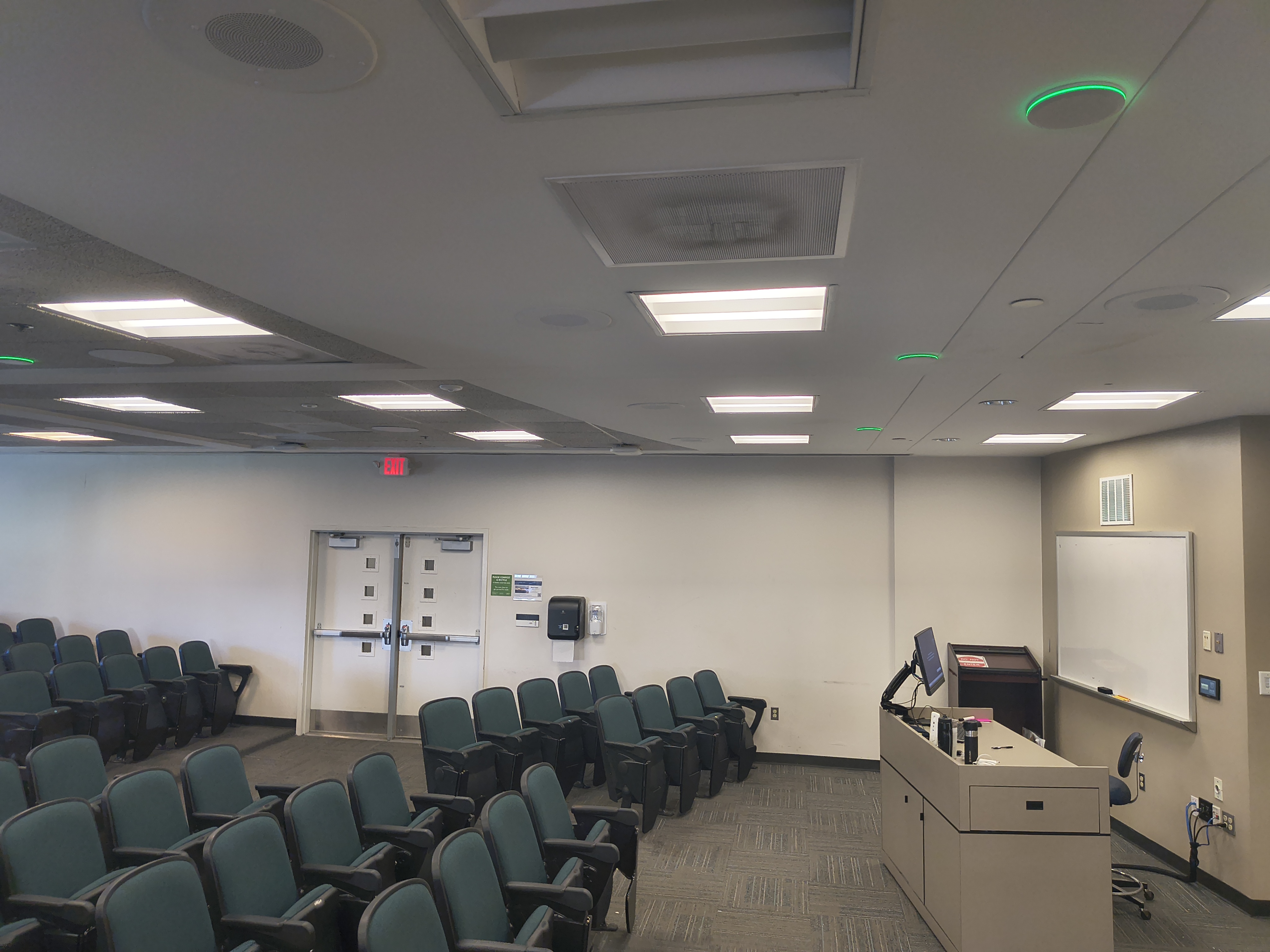
Anthropology Room 303 became the ideal pilot space.
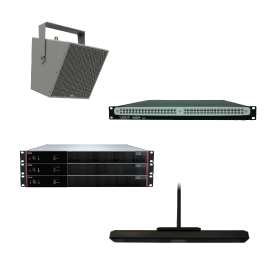
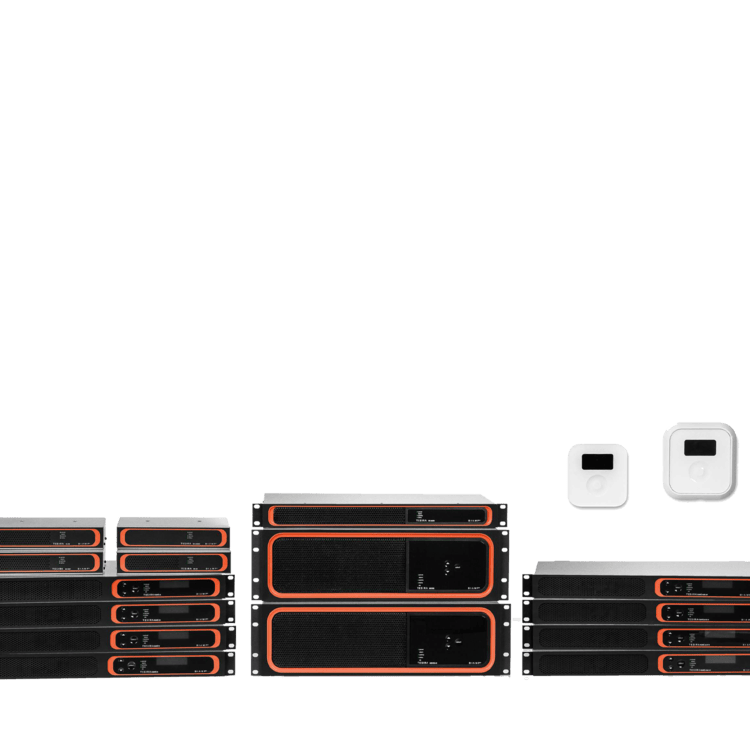
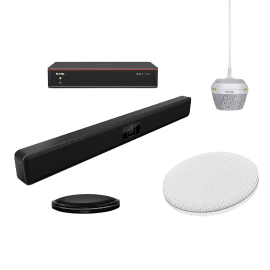
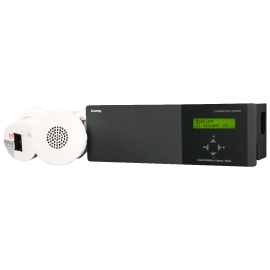
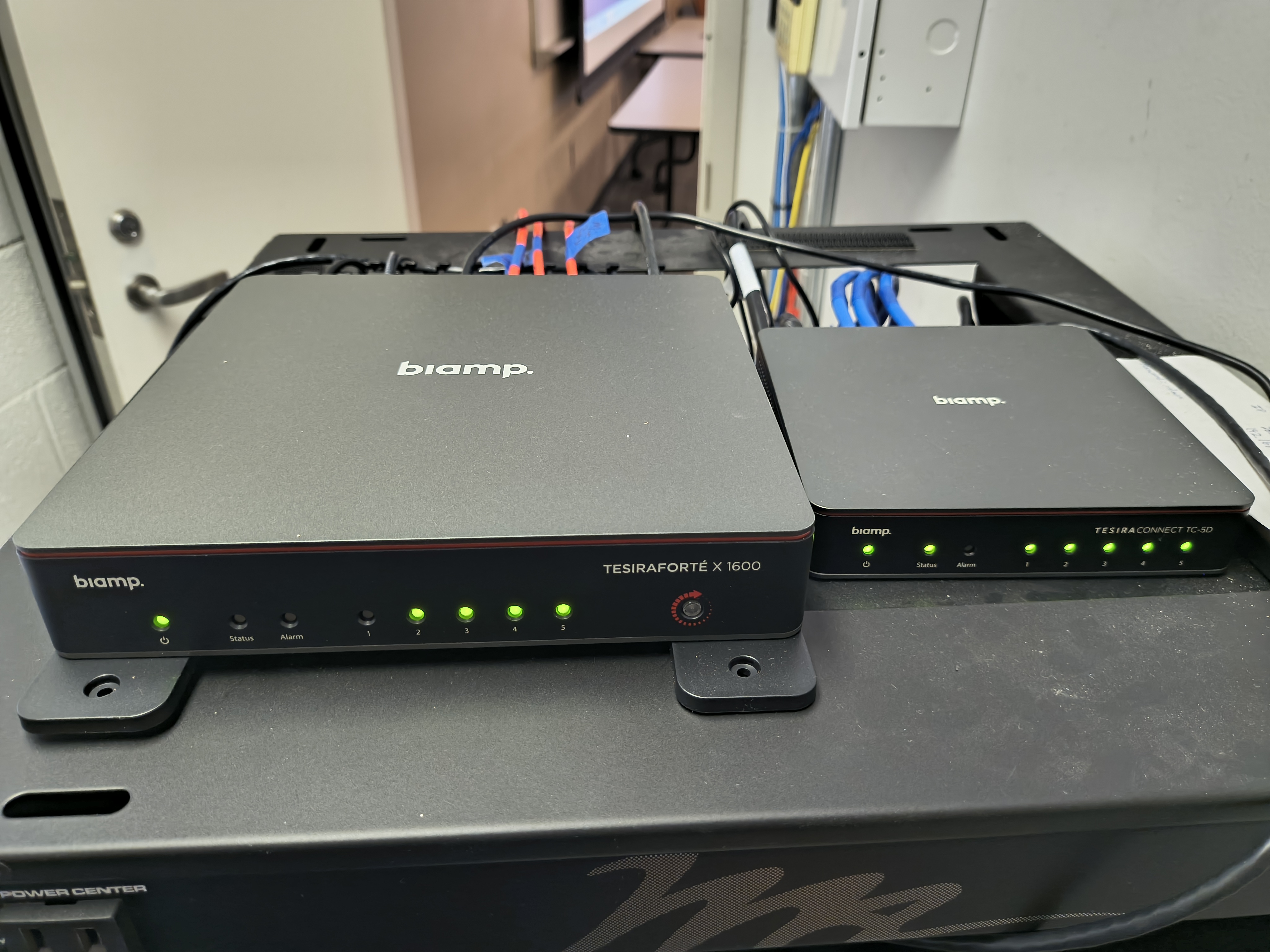
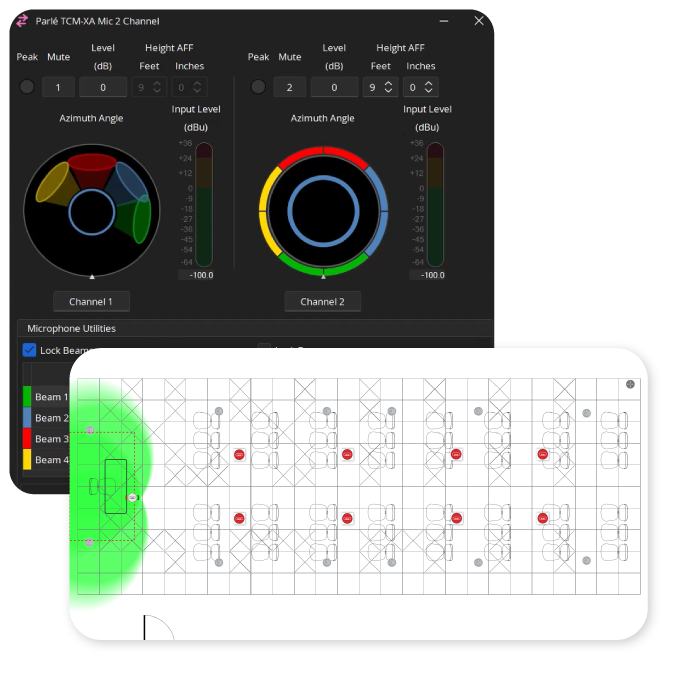
The room previously contained an ineffective voice lift system, making it an ideal candidate to demonstrate a different approach. Rather than relying on wearable microphones, Parlé Voice Lift leverages existing Parlé Beamtracking ceiling microphones together with TesiraFORTÉ X processors to naturally reinforce the instructor’s voice as they move throughout the presentation area.
For Emory, this solved more than an audio problem—it eliminated an operational one.
“We really do want solutions that just work,” Fisher explained. “Whether it’s pushing the ‘ON’ button and everything comes on, or microphones that are simply part of that ‘just works’ equation, that’s something we’re hugely interested in.”
Building on an existing Biamp investment
Because the college already used Biamp technologies, implementing Parlé Voice Lift required no new microphone infrastructure.
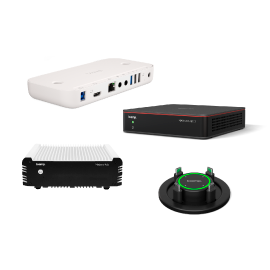
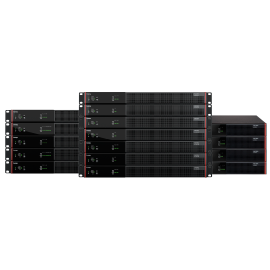
Across campus, approximately 140 learning spaces utilize Biamp systems, including TesiraFORTÉ X 400 and X 800 processors and roughly 300 Parlé TCM Beamtracking ceiling microphones. That existing investment made Voice Lift a natural extension of the technology already supporting hybrid learning, conferencing, and lecture capture.
Looking beyond the classroom
Following the success of the pilot installation, Emory is already evaluating additional spaces where Parlé Voice Lift can enhance communication.
One potential deployment is a large administrative meeting room used by university leadership for strategic planning and operational meetings. Fisher believes demonstrating the technology in these highly visible environments will accelerate adoption across campus.
“When I see a room that fits this application, the first thing that comes to my head is, ‘Can we do what we’re doing in room 303 in here?’”
Conclusion
For Emory College of Arts and Sciences, Parlé Voice Lift represents more than another classroom technology—it removes one of the biggest barriers to adopting voice reinforcement altogether. By eliminating handheld and/or lavalier microphones, batteries, charging stations, and ongoing equipment management, the college can provide natural voice reinforcement that increases presenter confidence while remaining virtually invisible to faculty and IT staff alike.
As the university continues expanding its Biamp ecosystem, Parlé Voice Lift has become another example of technology that simply works—allowing educators to focus on teaching instead of the tools supporting it.