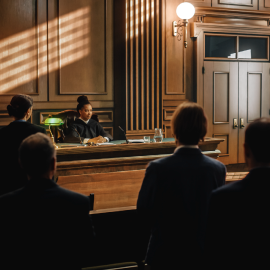
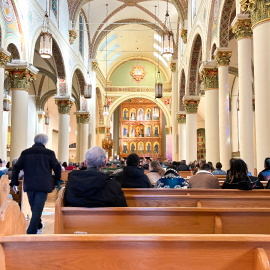
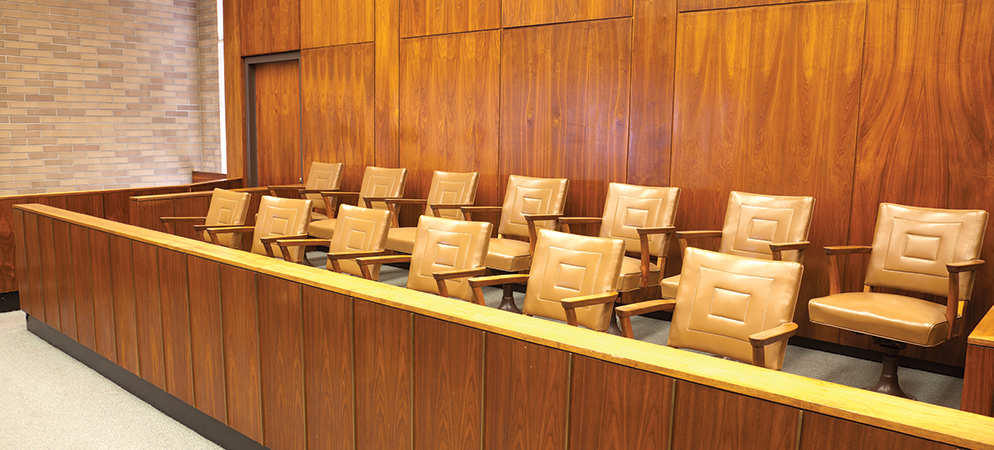
Courts face a variety of challenges to their goal of meting out justice in a timely fashion. Tight budgets, an increasingly diverse population, and difficulties maintaining a secure courtroom environment are common concerns. Remote video arraignment helps mitigate some of these issues, though.
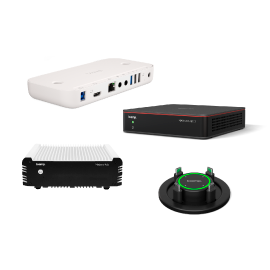
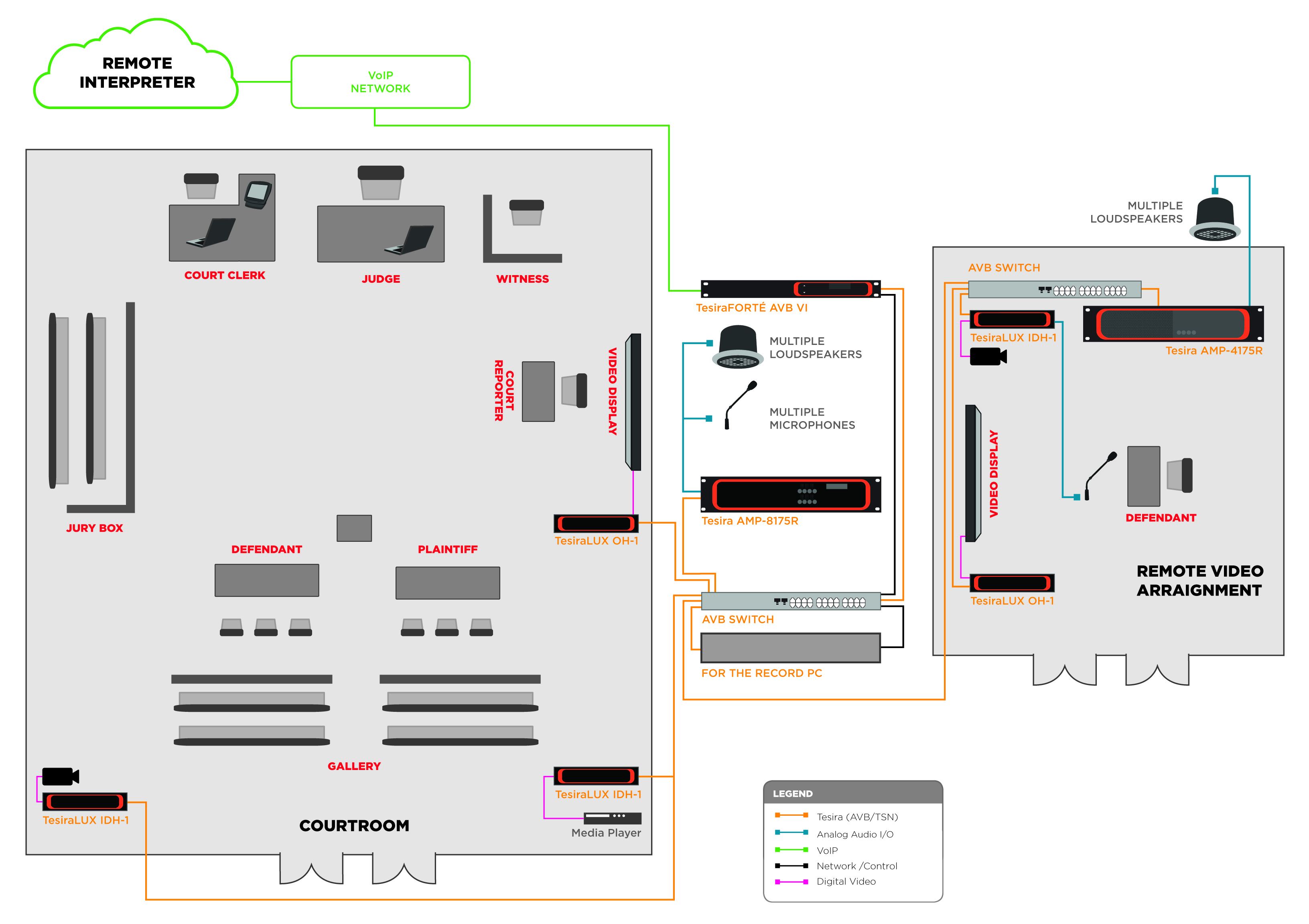
Remote arraignment reduces physical transportation costs and avoids scheduling delays by letting courts conduct routine proceedings while a defendant is at a detention or correctional facility within the same building. It also reduces the potential for courtroom disruptions and violence by keeping the defendant separated from their accuser(s). With the addition of TesiraLUX, the Tesira platform is uniquely positioned to provide legal professionals with exceptional audio and video to help them do their jobs accurately, effectively, and safely.
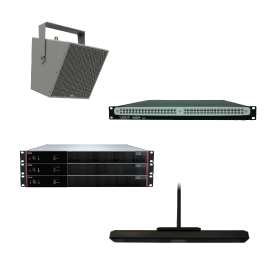
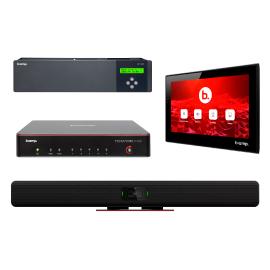
In this scenario, Tesira provides the audio and video processing for both the courtroom and remote arraignment room. The mic/line inputs on the TesiraLUX IDH-1 eliminate the need for an additional input endpoint in the arraignment area. VoIP connectivity enables the capability for remote testimony and interpretation, further streamlining cases by allowing courts to interact with qualified personnel without incurring travel costs or increasing logistical coordination. The AVB/TSN card installed in the PC running For The Record software allows all of the courtroom and remote arraignment audio to be recorded for transcription later.
Download a copy of this government design guide, and stay tuned to Component for future system design guides.
Filter By Month
Select Month
April 2026
March 2026
February 2026
January 2026
December 2025
November 2025
October 2025
September 2025
August 2025
July 2025
June 2025
May 2025
April 2025
March 2025
February 2025
January 2025
December 2024
November 2024
October 2024
September 2024
August 2024
July 2024
June 2024
April 2024
March 2024
February 2024
January 2024
December 2023
November 2023
October 2023
September 2023
August 2023
July 2023
June 2023
May 2023
April 2023
March 2023
February 2023
January 2023
December 2022
November 2022
October 2022
September 2022
August 2022
January 2022
October 2021
July 2021
May 2021
April 2021
March 2021
February 2021
January 2021
October 2020
August 2020
June 2020
May 2020
April 2020
March 2020
February 2020
January 2020
December 2019
November 2019
October 2019
September 2019
August 2019
May 2019
April 2019
March 2019
January 2019
December 2018
November 2018
October 2018
September 2018
August 2018
July 2018
June 2018
May 2018
April 2018
March 2018
February 2018
January 2018
December 2017
November 2017
October 2017
September 2017
August 2017
July 2017
June 2017
May 2017
April 2017
March 2017
February 2017
January 2017
December 2016
November 2016
October 2016
September 2016
August 2016
July 2016
June 2016
May 2016
April 2016
March 2016
February 2016
January 2016
December 2015
November 2015
October 2015
September 2015
August 2015
July 2015
June 2015
February 2015
January 2015
December 2014
November 2014
October 2014
May 2014
April 2014
March 2014
February 2014
January 2014
Filter Posts
Filter Posts
examples of complex audio systems
enterprise audio solutions
biamp processing technology
passive cooling methods
how to cool electro-mechanical devices
benefits of passive cooling
university of wisconsin eau claire student center
networked audio system configurations
networked audio case studies
what is AVB
multicast AVB traffic
the layers of a network
TCP/IP networking stack
Sound and Video Contractor networked media resource guide
OSI networking model
IEEE 802.1 protocols
AVB bandwidth reservation
what is networked audio
rapid prototyping
future of networked audio
product design process
design for manufacturing (DFM)
benefits of in-house manufacturing
ISE 2014
New Biamp Products
Biamp DAN-1 Dante card
adaptive processing technology
gain sharing auto mixers
auto mixers
Basics of AV Product Design
AV Product Design
what makes up an ethernet cable
anatomy of an ethernet cable
Key Benefits of AVB
audia
mix-minus
automixer basics
Collaboration
Open AVB
Global AV Industry
Room Acoustics
Mix-Minus
Gain Structure
Automixers
Constant Voltage Amplifiers
Networked Audio
Session Initiation Protocol
Audia
Courts
Biamp Case Studies
Audio Processing In Courtrooms
Future Trends
Avnu Education
Avnu
Active Learning Classroom
AV Technology
Bandwidth Management
Remote Arraignment
Content Protection
Pro Audio
Community Involvement
Biamp Volunteers
Biamp Gives Back
Biamp News
Misheard Song Lyrics
Intelligibility
lecture capture
Tesira
M-JPEG
Compression
Video
Huddle Spaces
Form Factor
Ceiling Microphone
Oreno
InfoComm 2016
TLUX
Mission
IoT
IEEE
Live Paging
Biamp Tesira 2.0 Updates
AVB/TSN
Paging
Vocia Training
TesiraFORTE Certification Training
Evolution of Pro Audio
General
ISE 2016
Internet of Things
AVnu Certification
Oreno Mobile Control
Technical Support
Support
Customer Experience
AVB
End of Line Devices
AVB
NFPA 72
Life Safety
EN 54-16
Chroma Subsampling
Bandwidth
Nexia
Wireshark
Solar Eclipse 2017
Lifestyle
Soft Codecs
Skype For Business
Microsoft Lync
Webinars
YouTube
Renewal Credits
FAQs
Emergency Communications
Tesira Expanders
Holidays
Holiday Fun
InfoComm
Biamp VoIP Training
Customer Support
Biamp Cornerstone
InfoComm 2017
Coffee
Tesira Amplifiers
Manufacturing
Inside Biamp
Continuous Improvement
Biamp Customer Service Commitment
Tesira
Sound Reinforcement
AMP-A460H
TesiraFORTE DAN
Zoned Paging
Non-Emergency Paging
Biamp Vocia System Design Guide
Time Synchronization
The World's First Truly Integrated Audio and Video Platform
Biamp Training
Bandwidth Reservation
ISE
PDX Jazz
Charitable Activities
Lip Sync
BYOD
HDR
CES
8K
Stories
Networks
Stories
Collaboration
Beamforming Microphones
Systems Management
System Monitoring
Tesira
Tesira EX-UBT
Biamp TesiraFORTE DSP
Biamp Tesira System Design Guide
PoE+
PoE
Longreads
AVB Switches
AVB Enabled Switches
802.1x
DSP
Case Studies
Tesira SERVER-IO
Tesira DSP
Biamp SageVue
AVB/TSN
General
Audio
Audiovisual Bliss
Blog
Connection
InfoComm 2018
Conference Calls
System Design Templates
Emergency Notification
AEC
Trade Shows
ISE 2018
Microphones
Teleconferencing
PoE+ Amplifiers
Halloween
Latency
HDCP
Beamforming
4K
Tesira Software
Pro AV
Portland
Music
Open Spaces
Open Offices
Collaboration Spaces
Beamtracking Microphones
Healthcare
Distance Learning
COVID-19
Stadiums
Sports
Retail
Restaurants
Leisure
Houses of Worship
Hospitality
Food Service
Entertainment
Classrooms
Arenas
iambiamp
Company Culture
Careers
pdxjazz
Jazz
Culture
SageVue
Mobile
Cambridge Qt X sound masking
Press Releases
Voltera D Series
Amplified Loudspeaker Controller
Loudspeakers
United Communications
Sound Masking
VLANs
subnets
network audio
corporate campus system design guide
ambient noise compensation
critical paging
AVB
pro audio
analog audio
Audio System
General
Customer Service
Business Communication
hardware solutions
Global AV industry
av/it convergence
Tesira
Tesira SERVER
redundancy
centralized processing
paging
Nurse Call Integration
Networked Media Systems
life safety paging
decentralized networked media systems
campus-wide paging
VoIP
Stories
Controls
Business Communication
2016
1976
Biamp at 40
Biamp 40
Louie Louie
The Kingsmen
History
Biamp History
Training
Community Loudspeakers
Evoko
Vidi
Protecting Information
Wall Masker
Duct Masker
Window Masker
Door Masker
MAX Connect
Room AV Control
Meeting
UCC
Community Involvement
Event Technology
Voice Intelligibility
Acousitics
Audio
Zoom
Microsoft Teams
Adaptable
Flexible
TSN
CobraNet
Communications
Modular
Pink Noise
Security
scalab
AV Integrators
AV Management
Camera Controller
Conferencing Camera
Video Camera
Camera
Celing
WELL Ecosystem
WELL Program
WELL Certification
Background Music
Background Noise
Noise Distractions
Privacy
Eavesdropping Protection
Audience
Interactive
Voltera
Press Release
Warehouse Designer
Unified Communications
Tradeshow
Project Designer
Crowd Mics
Sound Masking
Cambridge Qt X
Design Guide
Asymmetric
Uniform Coverage
Audio Control
Aisle Loudspeaker
Warehouse
AVB
Event Sponsorship
General
BYOM
Room and Desk Scheduling
Pro Video
Networking
Network Management
Monitoring
Devio
Business Communications
Workplace
Biamp Workplace
Award
Audiovisual Infrastructure
Active Learning
Education
Student
Classroom
System Design Guide
Audiovisual
Control
TesiraLUX
TesiraFORTE
Tesira
Customer Service
Conference Room Designer
Uninterrupted Communication
Decentralized Architecture
Voice Communications
Vocia
Videos
Emergency Communications Systems
Pro Audio
Extraordinary Audiovisual Experiences
IP rating
Outdoor Audio
Weather-resistant
PA System
Loudspeaker
Amplifiers
Stories
Parle
Microphones
Meetings
Conferencing
Ceiling Mics
White Noise
ProAV
Hybrid Work
Huddle Rooms
Teleconference
Hardware Design
Audio System