













Biamp Blog
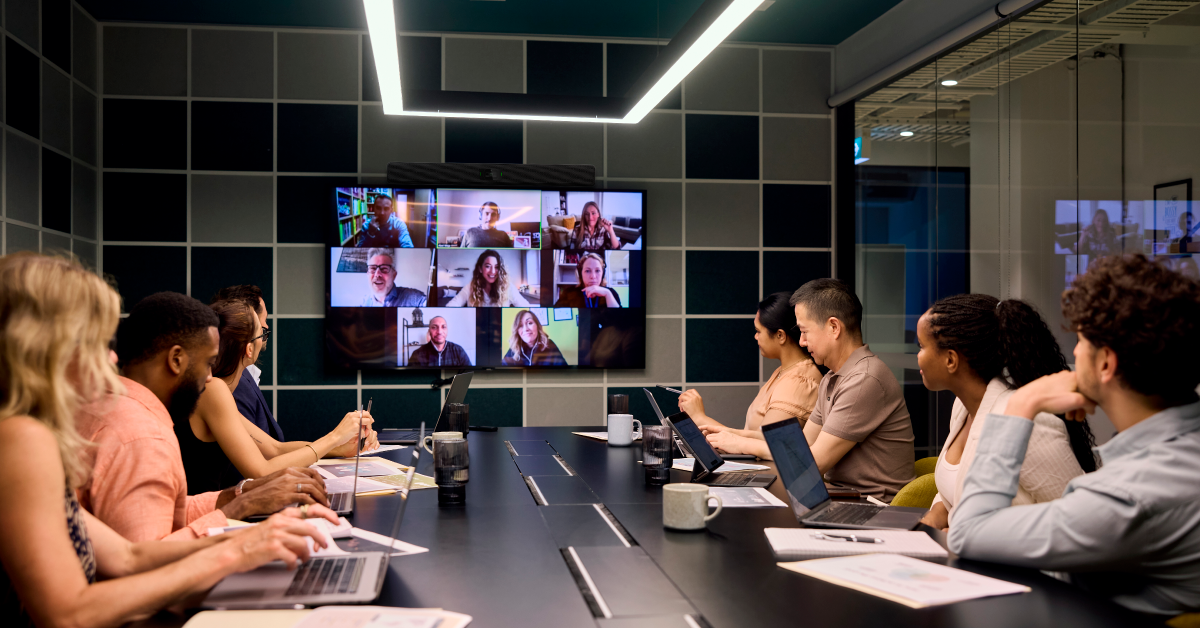
The modern office is no longer defined by desks and meeting rooms alone. It is defined by how smoothly people can move through the day.
As organizations continue to adapt to hybrid work, smart office technology has become less about novelty and more about operational value. The right combination of room scheduling, occupancy data, automation, digital signage, and workplace management tools can help organizations reduce waste, improve space utilization, and create a more efficient environment for employees and visitors alike.
Smarter spaces support better workdays
One of the clearest advantages of a smart office is that it removes everyday friction.
Employees should not have to wander the floor looking for an available desk, guess whether a meeting room is free, or spend the first 10 minutes of a meeting getting the room ready. Smart office tools help simplify those scenarios.
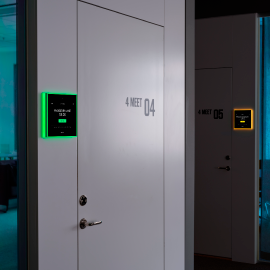
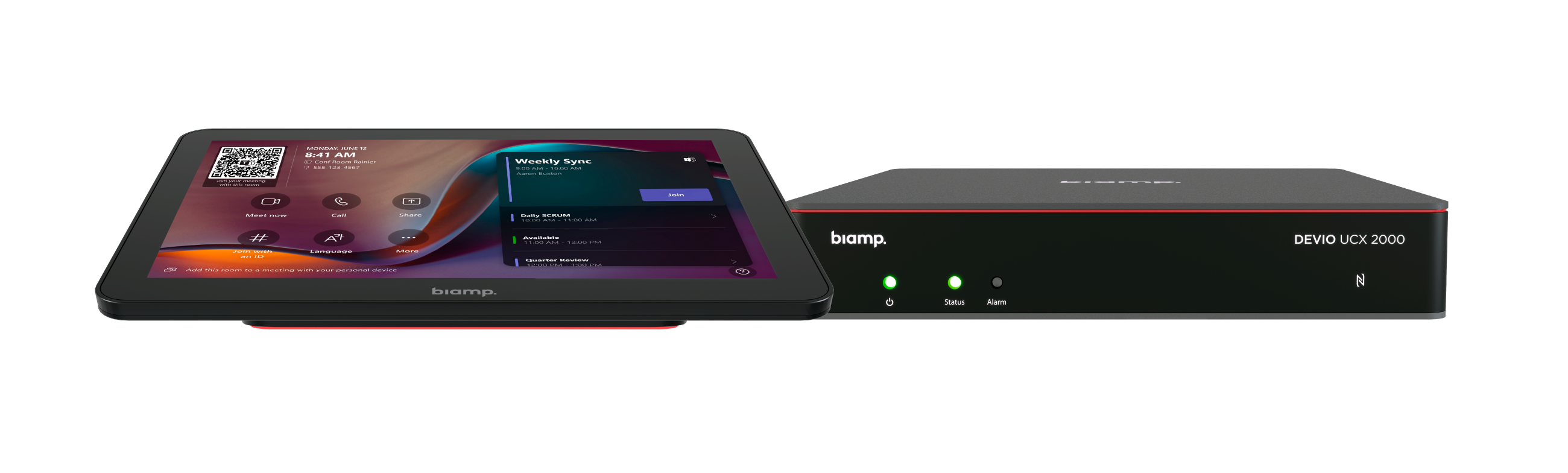
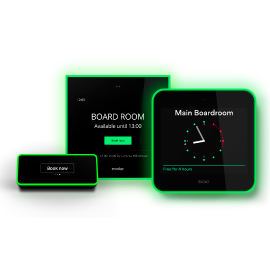
Room scheduling displays, desk booking systems, and workplace apps give employees real-time visibility into available spaces so they can find and reserve what they need quickly. Automated room controls can also help prepare spaces for use by activating displays, adjusting lighting, or managing environmental settings when a meeting begins. These small improvements add up, saving time across the workday and helping spaces feel easier to use.
Better visibility leads to better decisions
A smart office does more than help employees navigate the space. It also gives facility and workplace teams the data they need to make informed decisions.
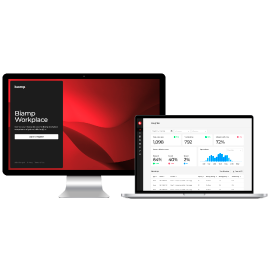
Occupancy sensors, room usage analytics, and workplace software can reveal how spaces are actually being used. Which rooms are constantly booked? Which desks sit empty? Are collaboration zones being used as intended? Are there bottlenecks at certain times of day?
These insights can help organizations optimize layouts, right-size real estate investments, and improve scheduling policies based on real behavior rather than assumptions. In many cases, the result is not simply a better office experience, but a more cost-effective one.
Automation means greater efficiency
When connected systems work together, routine tasks can happen automatically instead of relying on manual effort. Lights and climate settings can respond to room occupancy. Shared spaces can power down when not in use. Service teams can receive alerts when supplies need attention or when a room requires maintenance.
This kind of automation helps reduce unnecessary energy use, supports faster response times, and frees staff to focus on higher-value work. It also creates a more consistent experience throughout the building, with fewer interruptions and fewer avoidable issues for employees to manage on their own.
Navigation and communication become easier
In larger offices and campuses, wayfinding and communication can have a major impact on daily productivity.
Interactive maps, mobile guidance, and digital signage can help employees and guests quickly find meeting rooms, shared workspaces, amenities, and reception areas. At the same time, workplace communication tools can deliver relevant messages across screens and devices, whether the goal is to share announcements, welcome visitors, or provide updates about meetings and events.
These capabilities may seem simple, but they help reduce confusion, ease pressure on front-desk staff, and create a more polished workplace experience from the moment someone enters the building.
Visitor experiences can be more seamless
Smart office technology also improves how organizations welcome guests.
Visitor management tools can streamline arrival by helping guests pre-register, receive directions, and check in efficiently. Paired with digital signage and internal notifications, these tools can make visits feel more coordinated and professional while reducing administrative burden for reception and workplace teams.
Employee comfort still matters
Efficiency is important, but the best smart offices are not only optimized for operations. They are designed to support the people using them.
Environmental controls, better space management, and fewer day-to-day frustrations can all contribute to a more comfortable workplace. When employees can easily find a desk, reserve a room, navigate the office, and trust that shared spaces will work as expected, the office feels more supportive and less stressful.
Smart offices are practical, not futuristic
The idea of a smart office once sounded futuristic. Today, it is much more practical than that.
It is about using connected technology to solve common workplace problems: wasted space, wasted time, unclear room availability, inefficient communication, and inconsistent visitor experiences. When implemented thoughtfully, smart office solutions help organizations improve efficiency, reduce operational costs, and create workplaces that function better for everyone.
The smartest office is not the one with the most technology. It is the one where technology works quietly in the background to make the workday easier.
