

















Biamp Blog
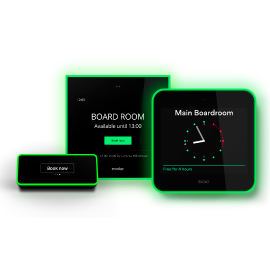
Some products are designed to stand out. Others are designed to fit naturally into the rhythm of the workday. The Evoko Kleeo desk manager was created to do the latter — delivering desk booking technology that feels intuitive, flexible, and unobtrusive.
Now part of the Biamp scheduling portfolio, the Evoko Kleeo continues to support flexible seating with real-time desk status, streamlined check-in options, and integration with Biamp Workplace. Looking back at its design phase offers a valuable reminder: the simplest user experiences often come from the most thoughtful design processes.
When Kleeo was being developed, the challenge was never just to create a functional device. It had to work for multiple audiences at once. It needed to be easy for employees to interact with, easy for installers to deploy, and flexible enough to suit different desk types and workplace layouts. That complexity became clear early in the design process.
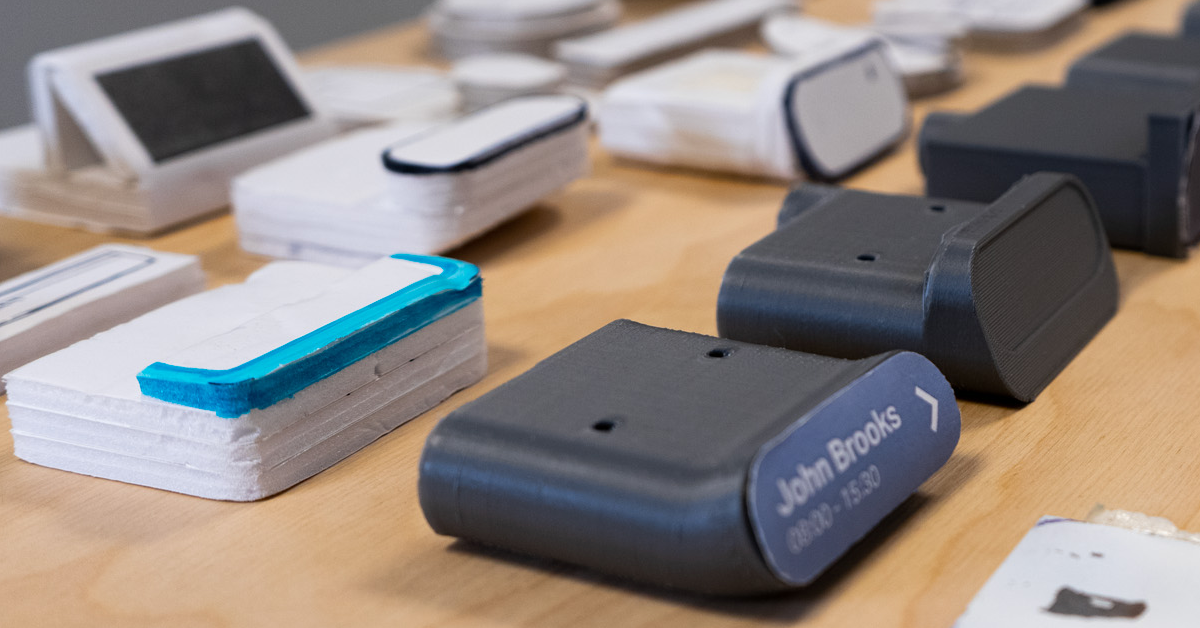
As industrial designer Simon Fredriksson explained, “We started with very simple means to see what kind of challenges come up.” That mindset shaped the project from the beginning. Rather than forcing a fixed idea into production, the team used early concepts and prototypes to uncover practical issues, adapt quickly, and refine the product over time.
That process led to one of the project’s most important turning points. Simon recalled, “The first part was that we tried to do a single product, where the sensor part and the actual product was in one. Throughout the process, we realized that it wasn’t the right solution.”
That realization opened the door to a better answer. Instead of staying locked into a single early concept, the team evolved the design to support more than one installation scenario, including placement on top of a desk or along its front edge. In retrospect, that decision says a great deal about what made the product successful: it responded to real-world workplace needs rather than asking workplaces to conform to the product.
It also underscored another important truth about product development. Great workplace technology does not begin and end with the end user. Installation matters too.
As Simon put it, “We don’t have just one primary user. We have the everyday user who’s going to use it to book desks and check in. But we had to look at the first stage, how we actually install it.”
That perspective helped shape a product that considered the full lifecycle. The goal was to reduce time and complexity during deployment while still delivering a polished, minimal design once the device was in place. Easy alignment, flexible mounting, packaging templates, and installation guidance all contributed to a smoother rollout experience. It was a practical design decision, but also a strategic one. Reducing effort during installation helps organizations save time, control costs, and scale more confidently.
At the same time, the team remained focused on what daily interaction should feel like for the employee sitting at the desk. Simon described that goal clearly: “When it comes down to the actual user, who interacts with this product on a daily basis, we wanted to make sure that the product offers a very non-intrusive experience.”
Looking back, the design decisions behind Kleeo still feel relevant because the workplace challenges they addressed are still relevant. Hybrid work, shared desks, and changing attendance patterns continue to make flexibility, visibility, and ease of use essential. Today, as part of the Biamp portfolio, the Evoko Kleeo fits into a broader workplace strategy that helps organizations manage desks, rooms, and other resources through Biamp Workplace.
Revisiting the design phase of the Evoko Kleeo is a reminder that lasting products are built through iteration, observation, and a willingness to rethink assumptions. Or, as Simon’s reflections suggest, success often begins by starting simple, learning quickly, and designing around real human needs.
Read more about the Evoko Kleeo and other extraordinary scheduling solutions from Biamp.
