














Biamp Blog
For decades, AV control was largely about giving users a convenient way to operate technology. Turn on a display. Select a source. Adjust the volume. Lower the shades.
Those functions still matter. But today's spaces are far more connected, and expectations have changed along with them.
Users don't want to control technology. They want to walk into a room and accomplish something—a meeting, presentation, lecture, training session, or collaboration—without thinking about all the technology making it possible.
That's why the future of AV control isn't really about adding more controls.
From device control to room orchestration
Modern rooms contain increasingly interconnected ecosystems of audio, video, conferencing, displays, lighting, shades, and environmental systems.
Treating each component as an independent device puts the burden on the user. A better approach is to think about the room as a single experience.
Instead of requiring someone to power on several devices, select inputs, adjust lighting, and configure audio, a control system can coordinate those actions automatically. Starting a presentation can trigger an entire sequence of events. Ending a meeting can return the room to its default state.
The complexity remains—but it moves behind the scenes.
That's the real purpose of intelligent AV control: making sophisticated technology feel remarkably simple.
Simple and powerful shouldn't be opposites
Historically, control system design has often involved a tradeoff.
Straightforward systems could be deployed quickly but offered limited flexibility. Highly customized systems could accomplish almost anything but required specialized programming expertise and significantly more design time.
That distinction makes less sense in modern AV environments.
A huddle room may need only basic display and volume control. A boardroom may require sophisticated automation across numerous systems. An organization deploying both shouldn't necessarily need entirely different approaches to control.
Workplace Control from Biamp addresses that challenge with a single environment designed to scale with project requirements.
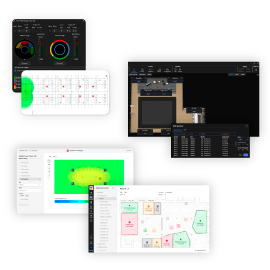
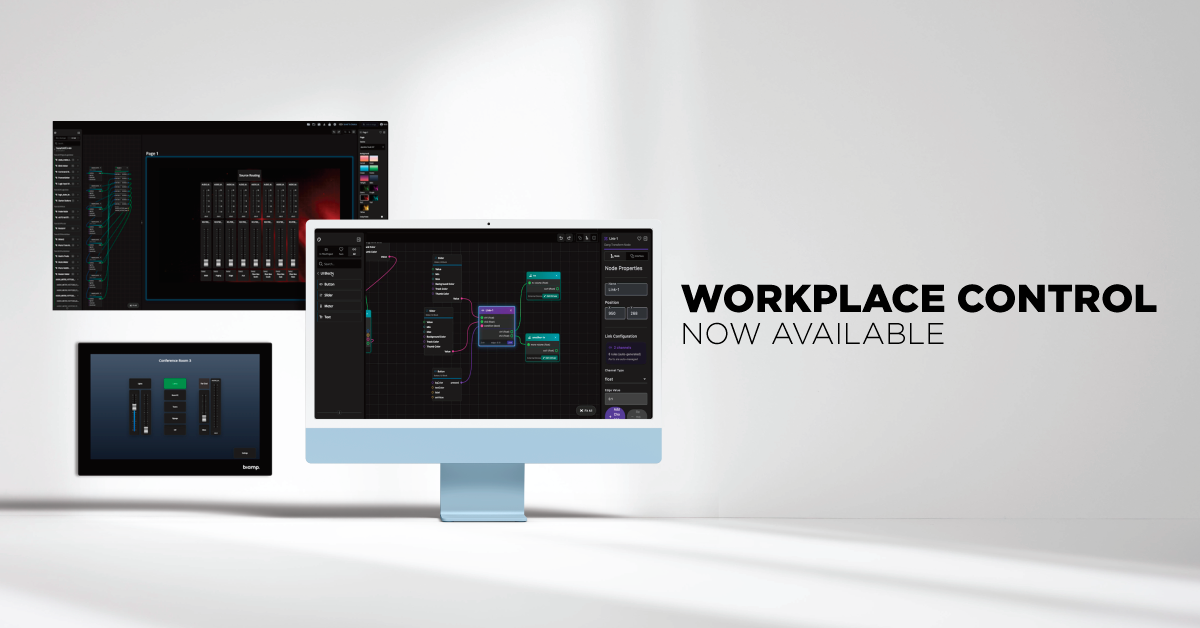
Workplace Control Designer provides drag-and-drop configuration for straightforward projects, a visual node-based environment for more sophisticated logic, and Lua scripting when deeper customization is required. Integrators can begin simply and add functionality as requirements evolve—without rebuilding the project in another platform.
Control needs to scale beyond the room
The next evolution of AV control isn't only about what happens inside an individual space.
Enterprise organizations may operate hundreds or thousands of rooms across buildings, campuses, and geographic regions. Creating an intuitive experience in one room is valuable. Creating a repeatable experience everywhere is transformative.
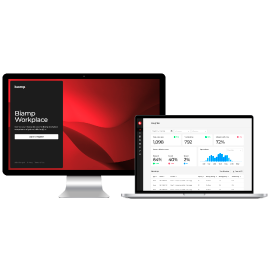
Built on the Biamp Workplace platform, Workplace Control connects control design with the broader AV lifecycle. Cloud-based project access and deployment help integrators and technology teams standardize systems while supporting spaces wherever they're located.
Workplace Control also brings Biamp and third-party devices into the same ecosystem, allowing organizations to create connected experiences without requiring every component in the room to come from a single manufacturer.
One experience from processing to control
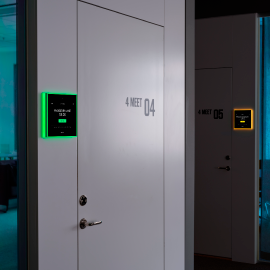
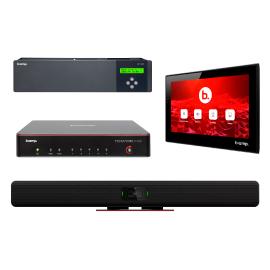
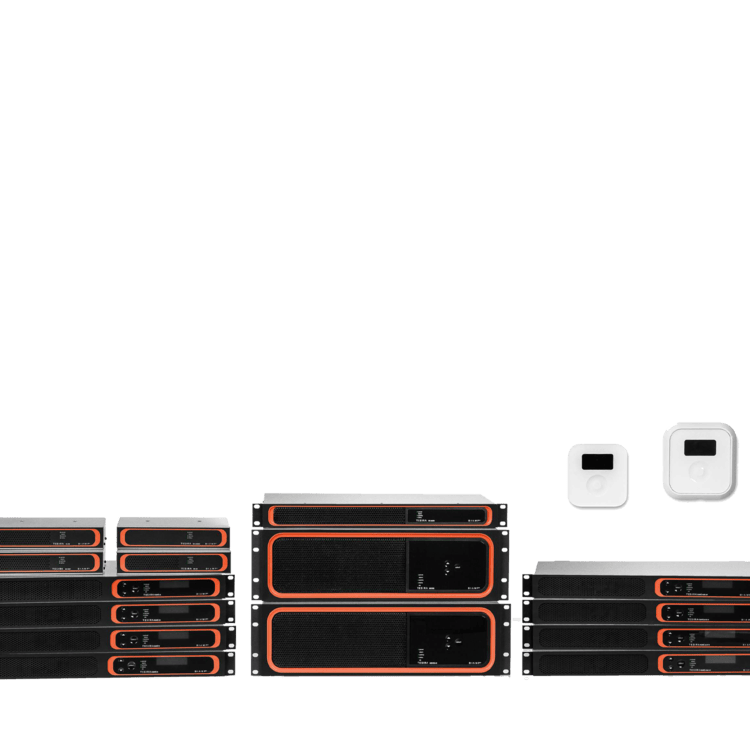
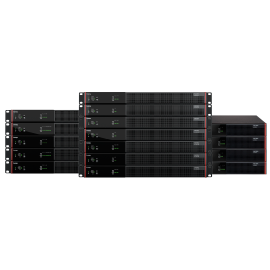
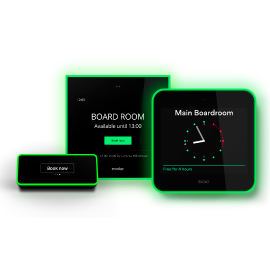
Workplace Control brings together TesiraFORTÉ X processors, Apprimo touch interfaces, and Workplace Control Designer as one unified platform.
That architecture is particularly important because audio processing and room control no longer need to exist as disconnected layers of the AV system.
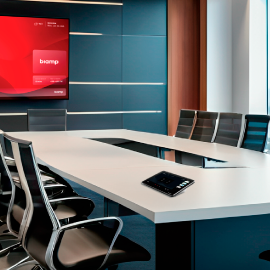
TesiraFORTÉ X provides the professional audio processing required by the room while also hosting the Workplace Control engine. Apprimo touch panels give users an intuitive interface, while Workplace Control Designer provides the environment for creating the experience behind it.
The result is fewer disconnected workflows and a more unified approach to designing, deploying, and operating the room.
Make the technology disappear
The ultimate measure of a great control system isn't how many commands it can execute.
It's how little the person using the room needs to think about them.
As AV environments become more sophisticated, successful control strategies will increasingly focus on hiding that complexity—giving integrators the flexibility they need, IT teams the scalability they require, and users an experience that simply works.
That's the philosophy behind Workplace Control and the broader Biamp approach to AV control.
Because the smartest room isn't necessarily the one with the most technology.
It's the one that makes all that technology feel effortless.
Read more about the full breadth of extraordinary AV solutions from Biamp.
